|
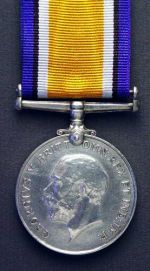
BRITISH WAR MEDAL
|
||
|
|
The British War Medal was
approved by King George V in 1919 to commemorate the services rendered by
His Majesty's Forces and to record the bringing of the war to a successful
conclusion. Awarded to personnel who performed 28 days mobilised service,
or who entered a theatre of war or who left their place of residence and
rendered approved service overseas other than waters dividing different
parts of the United Kingdom, between 5th August 1914 and 11th November
1918 both dates inclusive. Eligibility for the award was later extended to
cover the years 1919-20 while post war mine clearance at sea continued, as
did service in North and South Russia, the Eastern Baltic, Siberia, Black
Sea and Caspian Sea. It was intended to award campaign bars, but 79 were recommended by the Army and 68 by the Navy, so the scheme was abandoned as impractical. The naval bars were actually authorised (7th July 1920) and miniatures are known with them, though the actual bars were never issued. The reverse of the medal shows a horseman (St George) armed with a short sword. The horse tramples on the Prussian shield and skull and crossbones. Just off centre near the right upper rim is the Sun of Victory. The dates 1914 and 1918 appear in the left and right fields respectively. The ribbon consists of seven stripes; Blue, Black, White, Orange, White, Black, Blue. The medal was issued in two versions, silver and bronze and approximately 6,500,000 silver were issued and approximately 110,000 in bronze (mainly to Chinese, Indian and Maltese personnel in Labour Battalions and Native Labour Corps). Return to British Service Medals
|
|